Home About Us Our Publications Email Us:
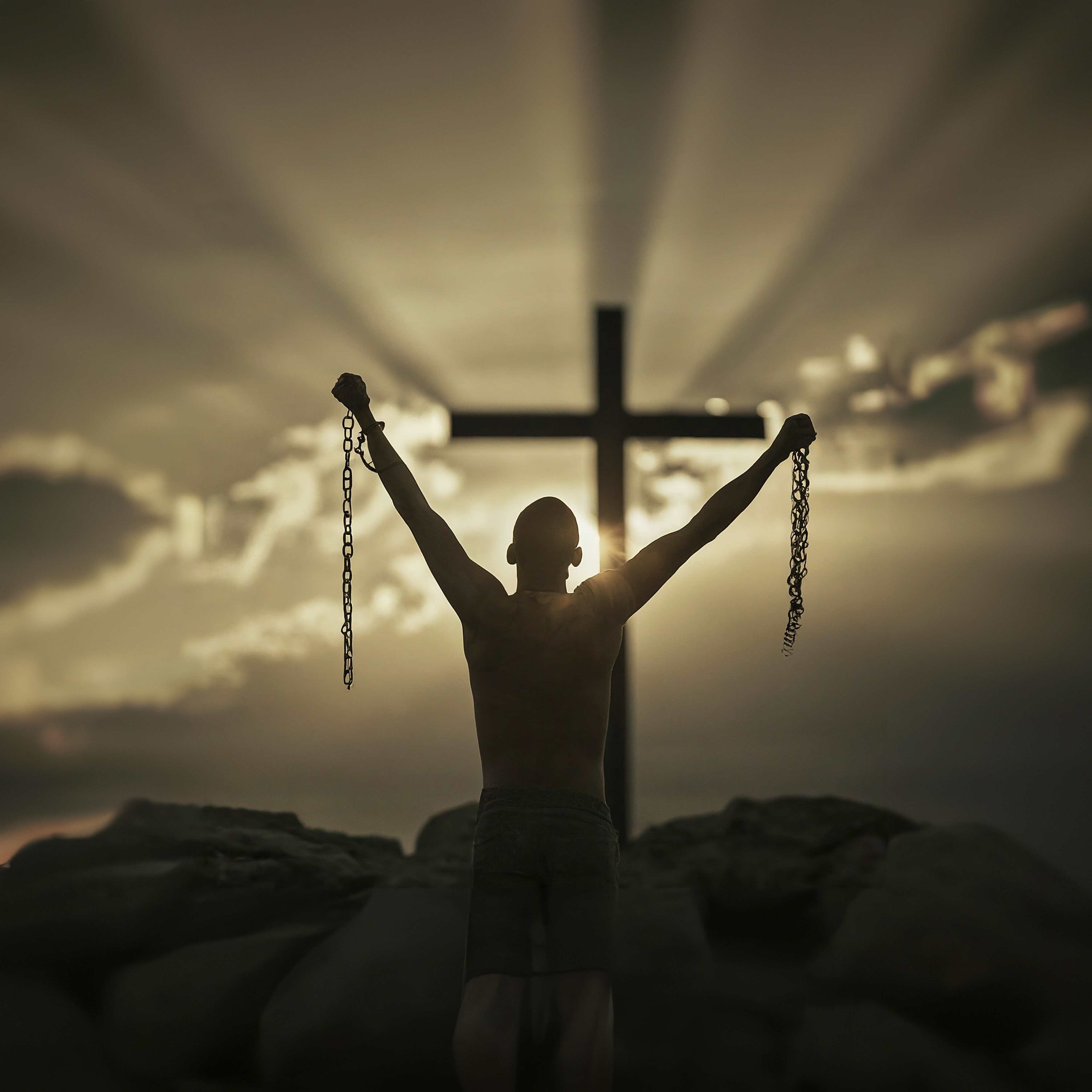
“For the law of the Spirit of life in Christ
Jesus has made me free from the law of sin and death.”
(Romans
8:2)
Book
of Ruth
Book of Ruth
From Wikipedia, the free encyclopedia
This article is about the ancient Hebrew religious text.
For the 20th-century English-language novel, see The Book of Ruth (novel). For
the 1960 film, see The Story of Ruth. For the 2009 film, see The Book of Ruth:
Journey of Faith. For the 2017 Ozark episode, see Book of Ruth (Ozark).
The Book of Ruth (Hebrew: מְגִלַּת
רוּת, romanized: Mĕgillat Rût, lit. 'Scroll
of Ruth'; one of the Five Megillot) is part of the third and final division—the
"Writings" (Ketuvim)—of the Hebrew Bible (Tanakh). In common printed
Hebrew Bible ordering, the book appears between Song of Songs and the book of
Lamentations.[1][2]
The book was likely written in Biblical Hebrew during the
Persian period (c. 550–330 BCE).[3][4] It narrates the story of Ruth, a
Moabite, who follows her Judean mother-in-law, Naomi, returning to her family's
ancestral town of Bethlehem, after the deaths of their husbands. Ruth's loyalty
to Naomi leads to Ruth's marriage to Boaz, the family's Judahite kinsman. The
two produce a son, Obed, who becomes the grandfather of Israel's King
David.[5][6]
In Judaism, Ruth is regarded as a paradigmatic ger (i.e., a
convert to Judaism), giving both Ruth and the book particular significance for
Jewish converts; rabbinic sources derive several laws of Jewish conversion from
Ruth's declaration.[7][8][9] The book is traditionally chanted during Jewish
prayer services in synagogues during the pilgrimage festival of Shavuot
(lit. 'Weeks').[10][11]
Structure
The book is structured into four chapters.[12]
Act 1: Prologue and Problem: Death and Emptiness (1:1–22)
Scene 1: Setting the scene (1:1–5)
Scene 2: Naomi returns home (1:6–18)
Scene 3: Arrival of Naomi and Ruth in Bethlehem (1:19–22)
Act 2: Ruth Meets Boaz, Naomi's Relative, in the Harvest
Field (2:1–23)
Scene 1: Ruth in the field of Boaz (2:1–17)
Scene 2: Ruth reports to Naomi (2:18–23)
Act 3: Naomi Sends Ruth to Boaz on the Threshing Floor
(3:1–18)
Scene 1: Naomi Reveals Her Plan (3:1–5)
Scene 2: Ruth at the threshing-floor of Boaz (3:6–15)
Scene 3: Ruth reports to Naomi (3:16–18)
Act 4: Resolution and Epilogue: Life and Fullness (4:1–22)
Scene 1: Boaz with the men at the gate (4:1–12)
Scene 2: A son is born to Ruth (4:13–17)
Genealogical appendix (4:18–22)
Summary
Hebrew text of Ruth
During the time of the biblical judges, an Israelite family
from Bethlehem (who are Ephrathites)—Elimelech, his wife Naomi, and their sons
Mahlon and Chilion—emigrate to the nearby country of Moab. Elimelech dies, and
the sons marry two Moabite women: Mahlon weds Ruth and Chilion Orpah.
After about ten years, Naomi's two sons also die in Moab
(1:4). Naomi decides to return to Bethlehem. She tells her daughters-in-law to
return to their own mothers and remarry. Orpah reluctantly leaves. However,
Ruth demurs: "Do not urge me to leave you, to turn back and not follow
you. For wherever you go, I will go; wherever you lodge, I will lodge; your
people shall be my people, and your God my God. Where you die, I will die, and
there I will be buried. Thus and more may the Lord do to me if anything but
death parts me from you." (Ruth 1:16–17 NJPS).
Naomi and Ruth return to Bethlehem at the beginning of the
barley harvest and, in order to support her mother-in-law and herself, Ruth
goes to the fields to glean. As it happens, the field belongs to a man named
Boaz, who is kind to her because he has heard of her loyalty to her
mother-in-law. Ruth tells Naomi of Boaz's kindness, and Ruth continues to glean
in his field through the remainder of the barley and wheat harvests.
Boaz, being a close relative of Naomi's husband's family,
is therefore obliged by the levirate law to marry Ruth, Mahlon's widow, to
carry on his family's inheritance. Naomi sends Ruth to the threshing floor at
night where Boaz sleeps, directing Ruth to "uncover his feet and lie
down" and "await his instructions" (3:4). Ruth complies. On
awakening, Boaz asks her who she is, and she replies: "I am your handmaid
Ruth. Spread your robe over your handmaid, for you are a redeeming kinsman"
(3:9 NJPS).
Acknowledging he is a close relative, Boaz blesses her and
agrees to do all that is required. He notes that "all the elders of my
town know what a fine woman you are" (3:11 NJPS). However, Boaz advises
her that she has a male relative closer than he. Ruth remains in submission at
his feet until she returns to the city in the morning.
Early that morning, Boaz goes to the city gate to meet with
the other male relative before the town elders. The relative is not named. Boaz
addresses him as ploni almoni "so and so". The relative, unwilling to
jeopardize the inheritance of his own estate by marrying Ruth, relinquishes his
right of redemption, thus freeing Boaz to marry Ruth. They transfer the
property, redeeming it, and ratify the redemption by the nearer kinsman taking
off his shoe and handing it over to Boaz. 4:7 notes for later generations that:
Now this was formerly done in Israel in cases of redemption
or exchange: to validate any transaction, one man would take off his sandal and
hand it to the other. Such was the practice in Israel (NJPS).
Boaz and Ruth are then married and have a son. The city's
women celebrate Naomi's joy in finding a redeemer to preserve her family name.
Naomi takes the child and places it on her bosom.
The child is named Obed, whom the reader discovers is
"the father of Jesse, the father of David" (4:13–17); that is, he is
the grandfather of King David, and so Ruth is the great-grandmother of King
David.
The book concludes with an appendix tracing the Davidic
genealogy all the way back from Perez, "whom Tamar bore to Judah",
through to Obed, down to David.
Composition and genre
According to some scholars, the Book of Ruth is possibly a
work of historical fiction[13][14] while other scholars hold that the Book is a
historical narrative written in the form of a short story.[15]
The book does not name its author.[16] It is traditionally
ascribed to the prophet Samuel (11th century BCE), but Ruth's identity as a
non-Israelite and the stress on the need for an inclusive attitude towards
foreigners suggests an origin in the fifth century BCE, when intermarriage had
become controversial (as seen in Ezra 9:1 and Nehemiah 13:1).[17]
A substantial number of scholars therefore date it to the
Persian period (550–330 BCE).[3] The genealogy that concludes the book is
believed to be a post-exilic Priestly addition, as it adds nothing to the plot;
nevertheless, it is carefully crafted and integrates the book into the history
of Israel running from Genesis to Kings.[18]
Oldest surviving manuscripts
End of the book of Ruth in the Damascus Crown, a 1260
manuscript written in Burgos, Spain.
Surviving manuscripts date from hundreds or thousands of
years after initial authorship. The oldest Hebrew manuscripts include the
Aleppo Codex (10th century) and Codex Leningradensis (1008).[19] Some fragments
containing parts of this book were found among the Dead Sea Scrolls, i.e.,
4Q104 (~50 BCE),[20][21][22] 4Q105 (30 BCE – 68 CE),[20][23][24] 2Q16 (~50
CE),[20][25][22] and 2Q17 (~50 BCE), with only slight variations from the
Masoretic Text.[26]
A large letter נ, a majuscula, occurs in the first
word of Ruth 3:13 - לִינִי (lî-nî;
"tarry, stay, lodge, pass the night") - which the smaller Masora
ascribes to the Oriental or Babylonian textualists.[27][28]
There is also a translation into Koine Greek known as the
Septuagint, made in the last few centuries BCE. Extant ancient manuscripts of
the Septuagint version include Codex Vaticanus (4th century), Codex
Alexandrinus (5th century).[29] The whole book of Ruth is missing from the
extant Codex Sinaiticus.[30]
Themes and background
Levirate marriage and the "redeemers"
The Book of Ruth illustrates the difficulty of trying to
use laws given in books such as Deuteronomy as evidence of actual practice.[3]
Naomi plans to provide security for herself and Ruth by arranging a Levirate
marriage with Boaz. She instructs Ruth to uncover Boaz's feet and lie down
after he has gone to sleep. When Boaz wakes up, surprised to see a woman at his
feet, Ruth explains that she wants him to redeem (marry) her. The usual
interpretation is to see sexual allusions in this part of the story, with
'feet' as a euphemism for genitals.[31][32][33][Note 1]
Since there is no heir to inherit Elimelech's land, custom
required a close relative (usually the dead man's brother) to marry the widow
of the deceased in order to continue his family line (Deuteronomy 25:5–10).
This relative was called the goel, the "kinsman-redeemer". As Boaz
was not Elimelech's brother, nor Ruth his widow, scholars refer to the
arrangement here as "Levirate-like".[34] A complication arises in the
story when it is revealed that another man is a closer relative to Elimelech
than Boaz and therefore has first claim on Ruth.[34]
This conflict is resolved through the custom that required
land to stay in the family: a family could mortgage land to ward off poverty,
but the law required a male relative to purchase it back into the family
(Leviticus 25:25). When Boaz meets the near kinsman at the city gate, the place
where contracts were settled, the kinsman initially agrees to purchase
Elimelech's (now Naomi's) land, but upon hearing he must also take Ruth as his
wife, he withdraws his offer. Boaz thus becomes "kinsman-redeemer" to
Naomi and Ruth.[34]
Mixed marriage
The book can be read as a political parable relating to
issues around the time of Ezra and Nehemiah (the 5th century BCE):[12] unlike
the story of Ezra–Nehemiah, wherein marriages between Jewish men and non-Jewish
women were broken up, Ruth teaches that foreigners who convert to Judaism can
become good Jews, foreign wives can become exemplary followers of Jewish law,
and there is no reason to exclude them or their offspring from the
community.[36] Some believe the names of the participants suggest a fictional
nature of the story: the husband and father was Elimelech, meaning "My God
is King", and his wife was Naomi, "Pleasing", but after the
deaths of her sons Mahlon, "Sickness", and Chilion,
"Wasting", she asked to be called Mara, "Bitter".[12]
The reference to Moab raises questions, since in the rest
of the biblical literature it is associated with hostility to Israel, sexual
perversity, and idolatry, and Deuteronomy 23:3–6 excluded an Ammonite or a
Moabite from "the congregation of the Lord; even to their tenth generation".[12]
Despite this, Ruth the Moabite married a Judahite and even after his death
still regarded herself a member of his family; she then married another
Judahite and bore him a son who became an ancestor of David.[36] Concerning
this, the Mishnah says that only male Moabites are banned from the
congregation.[37]
Contemporary interpretations
"Levenspoort" (Arch of Life), with a quote from
Ruth 4:10 at its base; a bronze memorial sculpture by Yetty Elzas. In
remembrance of the 71 Jewish citizens of Wageningen and surroundings, deported
and murdered during the years 1940–1945
Scholars have increasingly explored Ruth in ways that allow
it to address contemporary issues. Feminists, for example, have recast the
story as one of the dignity of labour and female self-sufficiency,[38] and as a
model for lesbian relations,[39] while others have seen in it a celebration of
the relationship between strong and resourceful women.[40] Others have seen it
as a book that champions outcast and oppressed peoples.[41]
Genealogy: the ancestry of David from Ruth
Various relationships mentioned in the book form a family
tree:
Elimelech Naomi
Boaz Ruth Mahlon Chilion Orpah
Obed
Jesse
David
Verses 4:18–22 contains a genealogy Perez (son of Judah) to
David with names.[42]
Perez
Hezron
Ram
Amminadab
Nahshon
Salmon
Boaz
Obed
Jesse
David
Christian canon and reception
In most Christian canons, the Book of Ruth is treated as
one of the historical books and placed between Judges and 1 Samuel.[43] In the
Gospel of Matthew, Ruth and Boaz are named among the ancestors of Jesus of
Nazareth.[44]